



As product developers, we often talk about flavor, but craveability is where flavor becomes an experience. In this blog, our corporate executive chef, Howard Cantor, breaks down the science and sensory strategy behind building sauces that don’t just taste great but keep consumers coming back for more.
Nearly every consumer has encountered a sauce so compelling it commands attention, one that invites guests to savor every last drop, even to the point of tracing the plate or bowl to capture its full experience. This type of sauce turns an ordinary protein or side into a signature dish, and the reaction is almost universally, “Whatever is in this sauce, I want more.”
We often describe these products as craveable. But craveability is not magic, is not luck, and it certainly isn’t the result of a secret ingredient; it is the result of deliberate flavor formulation. Understanding how to formulate craveable flavors is the key for product developers, chefs, and food manufacturers to create sauces that consumers return to again and again.
What Is Craveability?
Let’s start by defining what craveability is: it’s a combination of emotional responses that create the desire for another bite, then another, and another. It goes beyond likeability. Someone may like a sauce once and never think about it again, but a craveable sauce has you coming back time and time again.
Craving a sauce creates anticipation; it leaves a lasting memory and triggers the subconscious to repeat that experience. From Korean BBQ and teriyaki to mole and Buffalo sauce, many successful sauces feature flavors that make them hard to forget.
The Recipe to Success
A craveable sauce has the following ingredients:
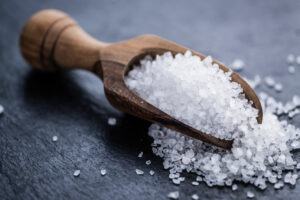 Salt and Sodium
Salt is the foundation of craveability; it works to enhance flavor, increase aroma, and helps deliver immediate and long-lasting satisfaction. Without the proper salt levels, flavor feels muted, aromatics dissipate, sweetness loses impact, and umami feels weak. With the right amount of sodium, you get flavor activation, and that is a building block for craveability.
Fat
Fat carries flavor. Aromatic compounds are generally fat-soluble, meaning they linger longer on the palate when paired with fat, because fat is a major player in sauce formulation. It works by providing richness, mouthfeel, flavor duration, and satisfaction.
Think about the difference between something as simple as hot sauce on its own and Buffalo sauce, which combines hot sauce and butter. The flavor experience becomes fuller, smoother, and more complete. Fat in the form of butter is a driving force behind why buffalo sauce is still one of the most craveable sauces ever created.
Umami
Umami creates the feeling of depth in the mouth, but it is often described as savory, meaty, brothy, or rich. Its true power lies in its ability to extend flavor perception. Umami compounds fire off receptors that increase overall flavor impact and extend that flavor to create a longer tasting experience.
Acidity
Acid creates excitement. It balances richness, cuts through fat, and refreshes the palate between bites. Without acidity, sauces become heavy; they can feel overly sweet, they can have an overly fatty mouthfeel, and the flavor tends to become monotonous.
Controlled Heat
Heat stimulates more than taste receptors; it activates pain receptors that create a mild physiological response. When properly balanced, heat contributes excitement, salivation, flavor growth, and persistence. Contrary to what we may be seeing in the marketplace, craveable sauces rarely rely on excessive heat; they build gradual warmth that encourages another bite rather than discouraging it.
Flavor Layering and Contrast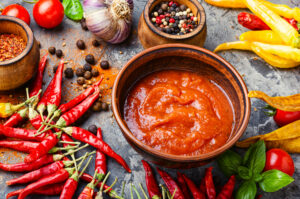
Craveable sauces stand apart through both flavor progression and contrast, working together to keep the palate engaged from the first bite to the last. Rather than delivering a single, static flavor, they unfold in layers, moving from initial sweetness into savory depth, building heat, and finishing with a lingering aromatic note. This evolution creates a dynamic experience that feels rewarding and encourages repeat bites.
At the same time, contrast, such as sweet and spicy or rich and acidic, prevents sensory fatigue by introducing tension and release. The brain is naturally drawn to this variation, making the overall experience more memorable and satisfying.
Aroma and texture further amplify this effect, shaping perception before and during consumption. Aroma begins building anticipation the moment a sauce is smelled, with cues like toasted garlic, citrus, or smoke signaling flavor even before the first bite. Texture then influences how that flavor is delivered, impacting coating, release, and perceived richness. A well-balanced sauce avoids extremes, ensuring it feels substantial without being heavy or muting flavor.
Ultimately, craveability is less about individual ingredients and more about the total sensory experience. When flavor layering, contrast, aroma, and texture work in harmony alongside foundational elements like salt, fat, umami, acidity, and heat, the result is a sauce that resonates emotionally. Consumers may not remember the formulation, but they will remember how it made them feel, and that’s what drives them to seek it out again.
 Use a simple check to evaluate craveability: does the sauce have enough salt to activate flavor, fat to carry it, umami to add depth, acidity to keep it bright, and heat that’s balanced? Beyond that, consider whether the flavors evolve over time, whether the aroma builds anticipation, and whether the texture supports how flavor is released. If any of these elements are missing, the sauce is likely out of balance.
At the end of the day, consumers don’t remember ingredients or processes; they remember how a sauce made them feel. The most successful sauces go beyond being technically balanced; they create a memorable experience that drives the desire for another bite. That’s the difference between a sauce that tastes good and one people actively seek out, talk about, and come back to again and again.
Seeking out sauce flavors with maximum craveability? Chef Howard and our team of R&D experts have got you covered! Contact us today to see how Fuchs can help you make something special.